Chemical processing plants may require pumps for high pressure applications, low flow duties, and difficult liquids with changing physical or chemical properties.
Pitot tube pump technology can be evaluated for selected chemical process pump applications based on the complete hydraulic duty, fluid composition, materials compatibility, and operating requirements.
Request Chemical Pump Review View Pitot Tube Pump
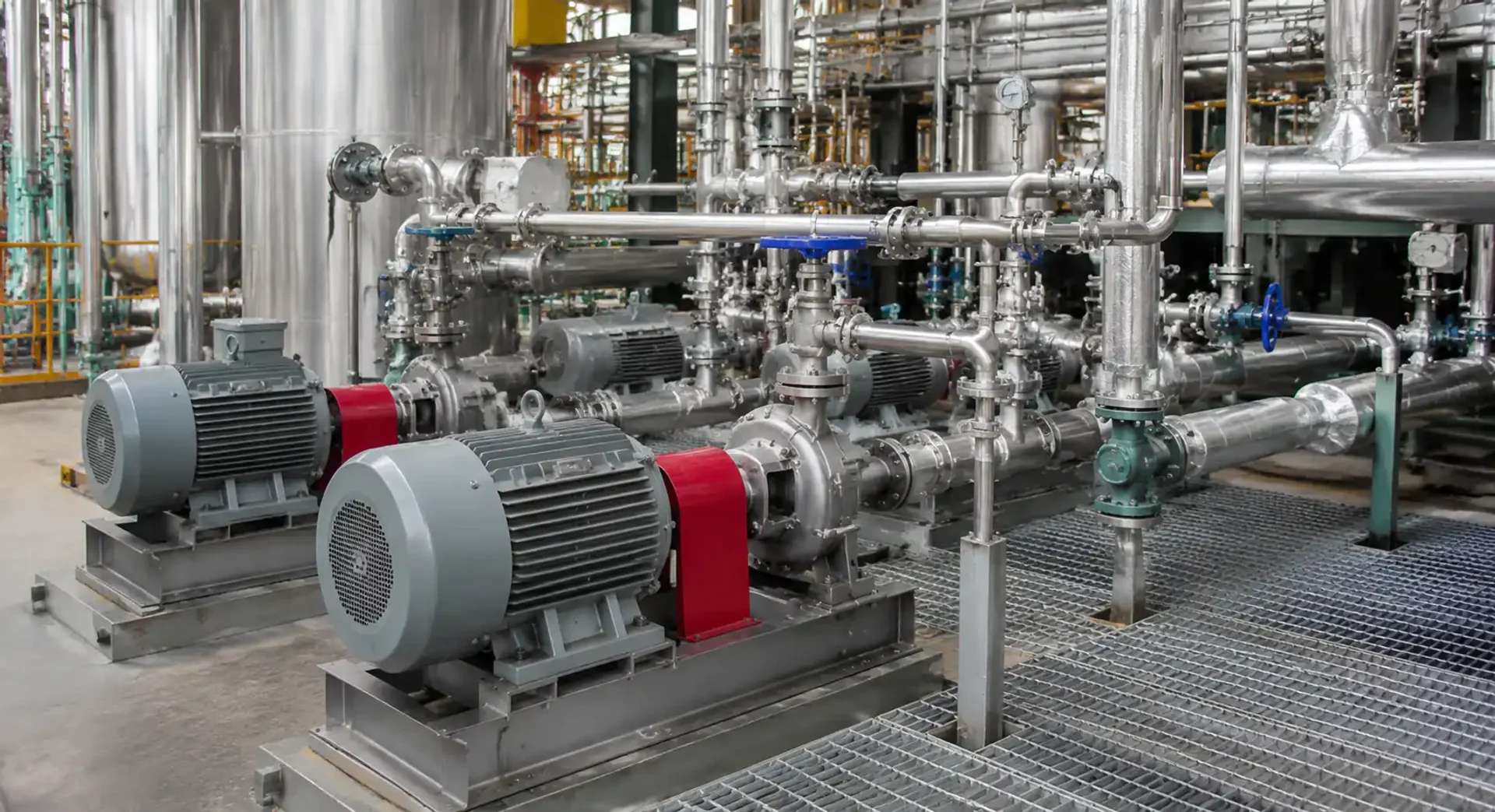
Chemical pump duties should be reviewed using process data, fluid compatibility information, plant standards, and the full range of operating conditions.
Fluid composition, concentration, contaminants, and corrosion behavior influence wetted material and seal selection.
Differential pressure, total head, suction conditions, and design pressure should be evaluated together.
Minimum, normal, and maximum flow conditions affect hydraulic selection and operating range review.
Concentration, temperature, batch composition, and startup conditions may change liquid viscosity.
Heating, cooling, cleaning, startup, and reaction conditions can affect fluid properties and materials.
Duty cycle, process criticality, seal history, maintenance access, and equipment availability should be considered.
Engineers evaluate pitot tube pump technology for selected applications that combine relatively low flow with high differential pressure. The rotating casing and stationary pitot tube convert fluid velocity into pressure through a centrifugal pumping process.
A pitot tube pump may be considered for chemical services after reviewing fluid composition, concentration, temperature, viscosity, vapor pressure, available suction conditions, corrosion risk, material specifications, and seal requirements.
Review Pitot Tube Pump TechnologyComplete process data supports hydraulic review, material compatibility assessment, seal selection, and application-specific pump configuration.
| Parameter | Consideration |
|---|---|
| Flow Rate | Minimum, normal, maximum, startup, batch, and expected control range. |
| Differential Pressure | Suction pressure, discharge pressure, differential pressure, total head, and design pressure. |
| Temperature | Minimum, normal, maximum, startup, shutdown, reaction, and cleaning temperatures. |
| Viscosity | Dynamic or kinematic viscosity across the expected concentration and temperature range. |
| Specific Gravity | Minimum, normal, and maximum specific gravity for the process fluid. |
| Chemical Compatibility | Fluid composition, concentration, contaminants, corrosion data, and process variations. |
| Materials | Wetted component materials, corrosion allowance, erosion risk, and plant specifications. |
| Seal Selection | Seal arrangement, elastomers, flush plan, emissions limits, utilities, and maintenance standards. |
Pitot tube pump technology can be evaluated for selected chemical duties requiring substantial differential pressure at relatively low flow.
A single-stage pitot tube pump may offer a compact equipment arrangement for suitable duties, subject to service and installation requirements.
Hydraulic performance and efficiency can be reviewed at the specified duty point and across the expected operating range.
Materials, seals, configuration, and performance can be considered for the specific fluid, process, and project requirements.
Review operating principles, configurations, performance range, and engineering selection support.
Explore pump technology for selected low flow, high head, and industrial high pressure duties.
Submit existing pump and process data for an application-specific replacement evaluation.
Evaluate pitot tube pump technology for selected multistage pump applications.
Compatibility review requires the complete chemical composition, concentration, contaminants, temperature range, pressure, and available corrosion or plant material data. Each wetted component and sealing material should be checked for the stated service.
Provide the safety data sheet, composition and concentration, contaminants, temperature, vapor pressure where relevant, toxicity or flammability concerns, and plant handling requirements. State any leakage, containment, flushing, or monitoring requirements.
Selection is based on the specific chemical composition, concentration, temperature, pressure, corrosion or erosion risk, and site specifications. No material or seal should be assumed suitable without reviewing those conditions.
These variables can change hydraulic performance, suction behavior, power demand, wear exposure, and seal requirements. Provide normal and limiting values together with particle size or gas-volume information when applicable.
Submit the process datasheet, safety data sheet, duty range, suction and discharge conditions, operating scenarios, material specifications, seal requirements, and applicable plant standards. Existing pump records and incident or maintenance history are useful for replacement work.
Send your duty range, pressure data, fluid composition, temperature, viscosity, materials, seal requirements, and current pump information for engineering review.