Plan a complete pump replacement or source components for an existing installation. Roto-Jet and our alternative pumps share the pitot tube principle; the project work matches the duty, parts and installation configuration.
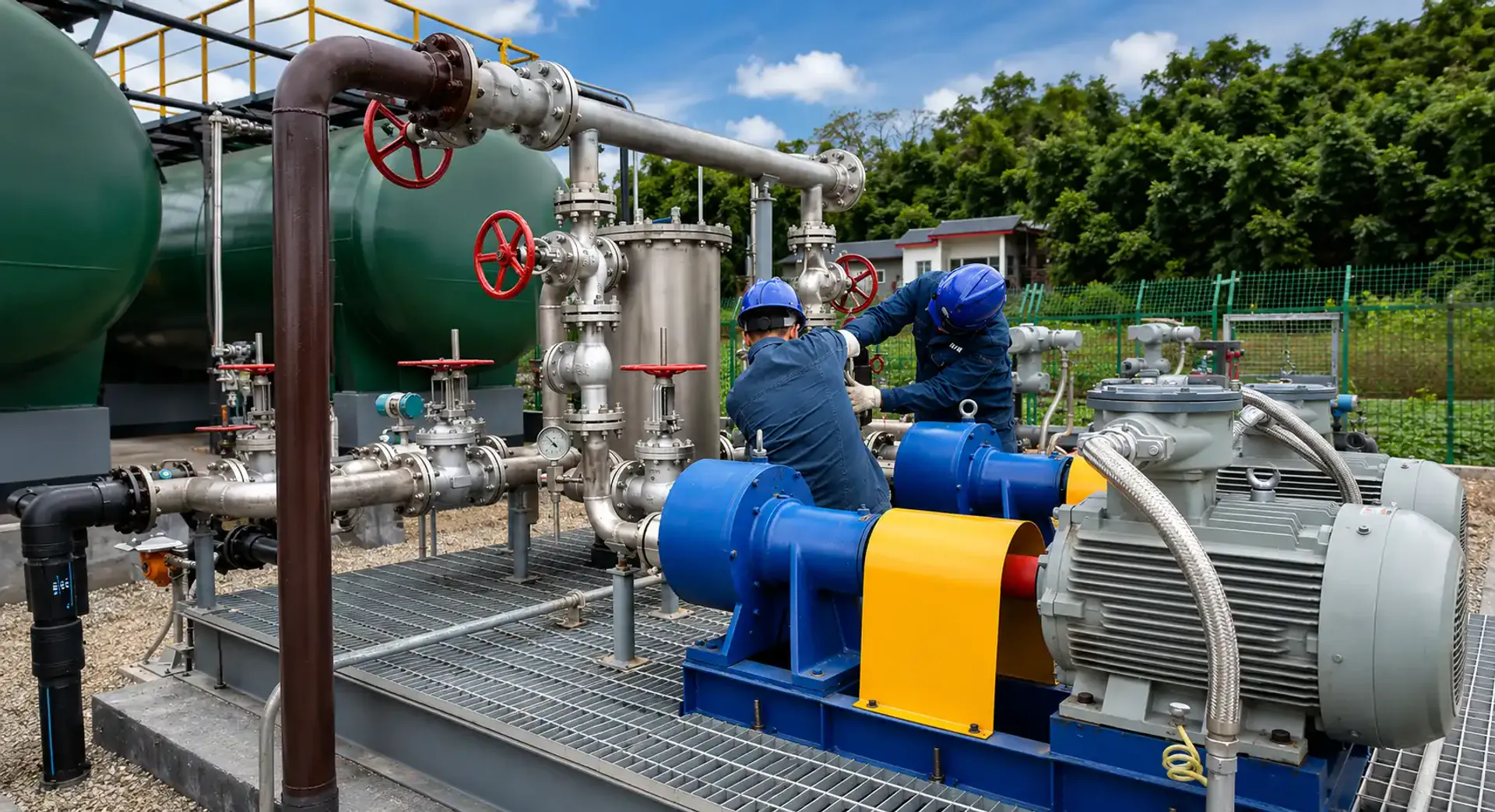
Provide the installed pump model and serial number, performance curve, current duty and operating problem. Include the motor, seals, nozzle arrangement, base and coupling drawings.
We define the hydraulic configuration, materials and seals, then compare installation dimensions to identify piping, base or drive changes.
Provide the pump model and serial number, part number or name, quantity, material and drawings or photographs. Identify whether the request is for a pitot tube, rotor assembly or another component.
We match part identification, dimensions and materials to the assembly. Other components require customer drawings or an old part.
Use the equipment records to distinguish a complete pump replacement from a component order. Establish the required duty or identify the part and assembly.
Compare the hydraulic curve, materials, seal arrangement and drive for a pump. Match dimensions, materials and assembly interfaces for replacement parts.
Bring the selected configuration or part specification into the quotation, with quantities, manufacturing requirements and dispatch arrangements.
Use the configuration comparison guide to organize the installed-pump data and the proposed alternative.
We regularly supply replacement pitot tubes (pick-up tubes) and rotor assemblies. Most models within these two part categories are available from stock.
Non-stock pitot tubes and rotor assemblies have a manufacturing lead time of 30 working days. Other components require customer drawings or an old part.
Provide the required date and destination with the parts list. Manufacturing lead time describes production; dispatch and transport arrangements are addressed separately for the order.
Send the Parts ListDescribe the operating problem and intended work. For a complete pump, include the required duty and installation records. For component replacement, identify the part, assembly, quantity and material, with drawings or photographs.
Compare nozzle orientation, size and connection standard, base and coupling dimensions, motor arrangement and maintenance space. Record the interfaces that will be retained and the changes required for installation.
Send the pump model and serial number, part number or name, quantity, material and available drawings or photographs. Include the operating fluid and any wear or performance issue that affects the part specification.
Provide customer drawings or an old part, together with the pump identification, quantity and material requirements. These establish the dimensions and production scope.
Choose the relevant inquiry route and attach the equipment records by email.